



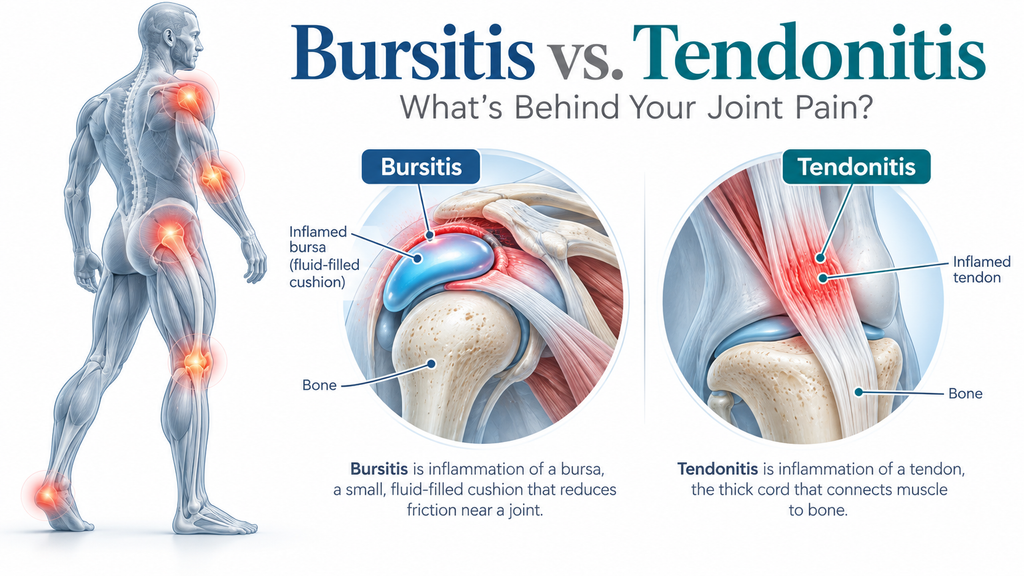
Pain around the shoulder, elbow, hip, or knee is not always arthritis. Two of the most common culprits are bursitis and tendonitis, soft tissue conditions that inflame the structures cushioning and moving your joints. Both are very treatable, especially when caught early.
What Is Bursitis?
A bursa is a small, fluid filled sac that reduces friction between bones, tendons, and muscles. You have more than 150 of them throughout your body. Bursitis happens when one of these sacs becomes inflamed, causing pain, swelling, and tenderness.
Common locations include:
- Shoulder (subacromial bursitis)
- Elbow (olecranon bursitis, sometimes called “student’s elbow”)
- Hip (trochanteric bursitis, felt on the outer hip)
- Knee (prepatellar bursitis, often linked to frequent kneeling)
- Heel (retrocalcaneal bursitis)
What Is Tendonitis?
Tendons are the tough, fibrous cords that connect muscle to bone. Tendonitis (also spelled tendinitis) is inflammation or irritation of a tendon, usually where it attaches near a joint. It typically causes pain that worsens when you move the affected area.
Familiar examples include:
- Tennis elbow (lateral epicondylitis) and golfer’s elbow (medial epicondylitis)
- Rotator cuff tendonitis in the shoulder
- De Quervain’s tenosynovitis at the base of the thumb
- Patellar tendonitis (“jumper’s knee”)
- Achilles tendonitis at the back of the ankle
How to Tell Them Apart
The two often occur in the same areas and can even happen together, so symptoms overlap. A few general patterns can help:
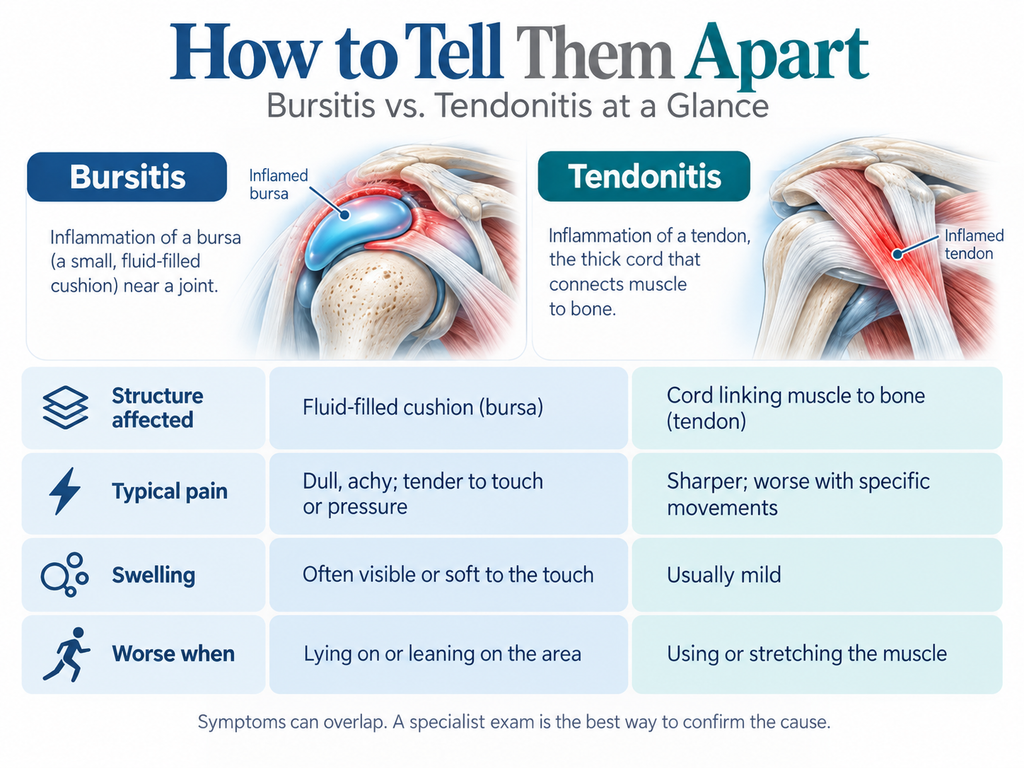
Because the overlap is significant, an exam by a specialist is the most reliable way to know which one you have.
Causes and Risk Factors
Most cases come from repetitive motion or sustained pressure. Common contributors include:
- Repetitive work, sports, or hobbies (gardening, painting, typing, tennis, golf)
- Prolonged kneeling or leaning on elbows
- Sudden increases in activity or poor technique
- Age, as tendons lose elasticity over time
- Infection, which can occasionally affect a bursa
The rheumatology connection: Inflammatory conditions such as rheumatoid arthritis, psoriatic arthritis, gout, and pseudogout can trigger or worsen bursitis and tendonitis. Diabetes and thyroid disease also raise risk. If your symptoms keep returning or appear in several places at once, an underlying condition may be driving them.
Diagnosis and Treatment
Diagnosis usually starts with a physical exam and a review of your activities. Your rheumatologist may order ultrasound, X ray, or MRI, and may draw fluid from a swollen bursa to rule out infection or crystals such as gout.
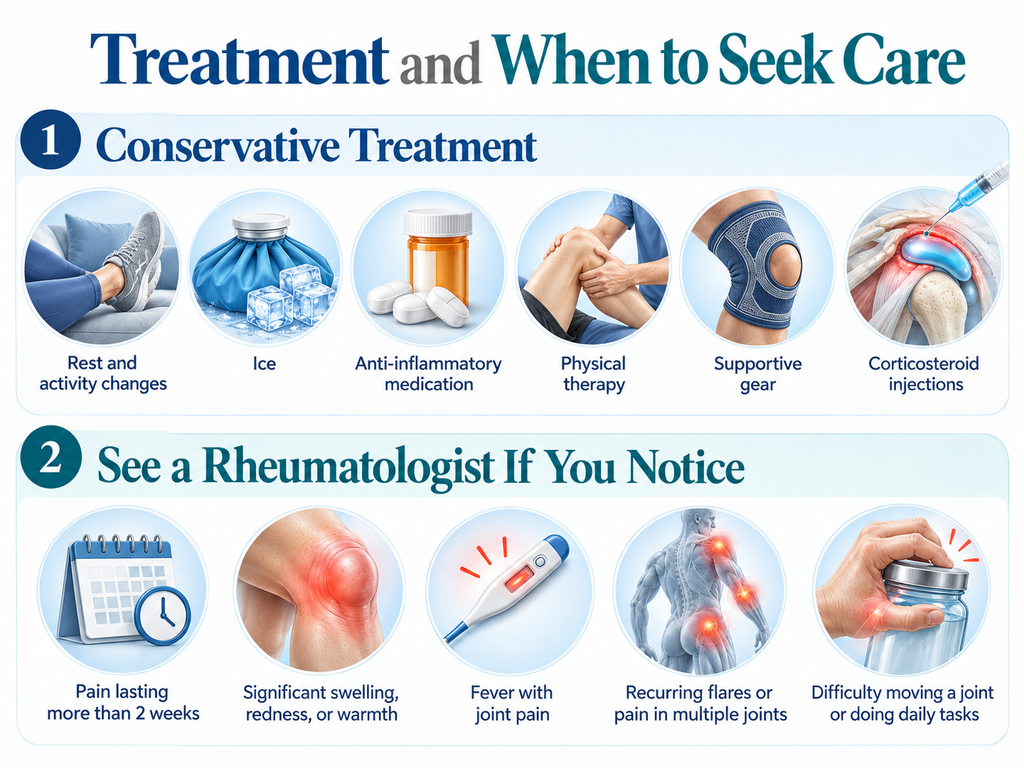
Most people improve with conservative care:
- Rest and activity changes to reduce strain on the area
- Ice to calm pain and swelling
- Anti inflammatory medication as directed by your provider
- Physical therapy to restore strength, flexibility, and mechanics
- Supportive gear such as braces, splints, or knee pads
- Corticosteroid injections for persistent pain
When an inflammatory disease is involved, treating that condition is key to preventing flares. Surgery is rarely needed.
When to See a Rheumatologist
Schedule an evaluation if you notice:
- Pain lasting more than two weeks despite rest and home care
- Significant swelling, redness, or warmth around a joint
- Fever along with joint pain, which may signal infection and needs prompt attention
- Recurring flares or pain in multiple joints
- Difficulty moving a joint or performing daily tasks
At Comprehensive Rheumatology Center in Woodland Hills, our specialists identify what is behind your pain and build a treatment plan that gets you moving comfortably again. Call 818-598-0000 to schedule your appointment.
This article is for educational purposes and is not a substitute for professional medical advice.